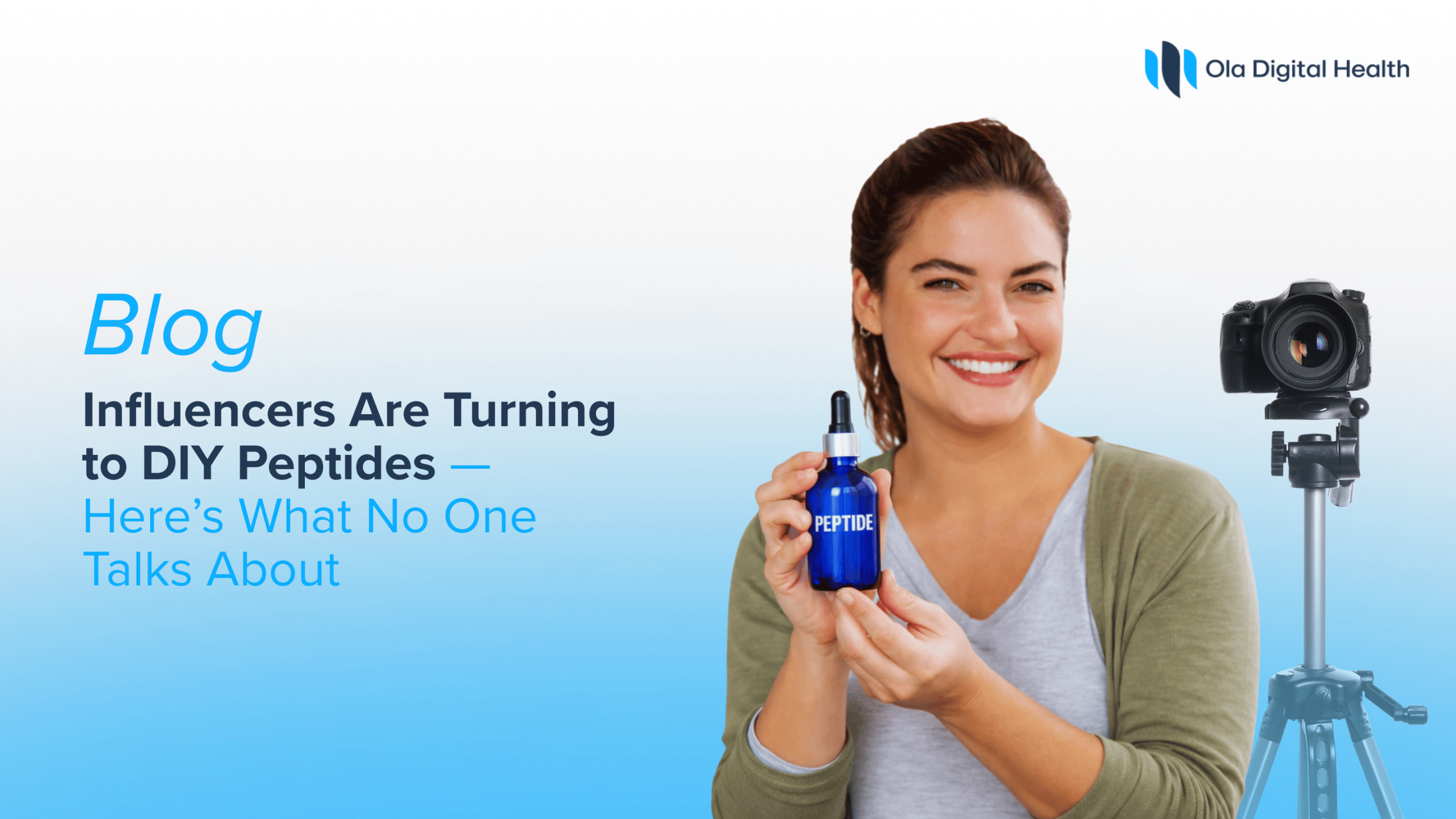
Scroll through Instagram or TikTok today, and you’ll notice something new. Influencers are no longer just promoting supplements or skincare. They’re talking about peptides. Sharing routines. Showing results. And in many cases, experimenting on themselves.
But behind all that content, there’s a side of the story that rarely gets discussed.
So before you get pulled into the hype, let’s break it down starting with a simple question: what is peptide therapy?
At its core, peptide therapy involves using short chains of amino acids to signal specific functions in the body. These signals can influence things like metabolism, recovery, hormone balance, and even skin health. That’s why it’s being explored for everything from anti-aging to weight loss and performance enhancement.
And yes, there are real peptide therapy benefits. When prescribed and monitored by medical professionals, peptides can support recovery, improve energy levels, and help optimize certain biological processes. In structured clinical settings, they’re part of a broader peptide therapy program not a quick fix.
But that’s not what’s trending online.
What’s trending is DIY peptide use.
Influencers are sourcing peptides from online vendors, experimenting with dosages, and sharing their experiences in real time. It looks simple. It feels accessible. And it’s often framed as “taking control of your health.”
The reality is far more complicated.
The biggest concern comes down to peptide therapy safety risks benefits specifically, the gap between clinical use and self-experimentation. In a proper medical setting, peptide therapy involves screening, lab testing, personalized dosing, and continuous monitoring. Without that structure, things can go wrong quickly.
Unregulated products are one major issue. When peptides are purchased online, there’s no guarantee of quality, purity, or even accuracy in labeling. Dosage becomes guesswork. And stacking multiple peptides something commonly seen in influencer routines adds another layer of uncertainty.
Recent reports have already highlighted cases of allergic reactions, hormonal imbalances, and metabolic disruptions linked to unsupervised peptide use.
This doesn’t mean peptides are inherently dangerous. It means context matters.
In fact, the growing interest in peptides isn’t surprising. According to Grand View Research, the global peptide therapeutics market is expected to reach tens of billions in value over the next few years, driven by demand in wellness, longevity, and metabolic health.
That kind of growth reflects genuine potential but also explains why misinformation spreads so easily.
Here’s the part most influencer content skips:
Peptide therapy is not just about the compound. It’s about the system around it.
A legitimate peptide therapy program includes medical oversight, structured protocols, and ongoing adjustments based on how your body responds. It’s not built on trial and error. It’s built on data.
Final thought
The conversation shouldn’t be “Do peptides work?”
It should be “Are they being used responsibly?”
Because when it comes to peptide therapy safety risks benefits, the answer depends entirely on how and where the therapy is being used.
In a clinic, peptides can be a powerful tool.
On your own, they can quickly become a gamble.
Set up a call with our specialists at Ola Digital Health to learn how structured, supervised peptide therapy programs can help you grow while maintaining patient safety at the top of the list.